ultra-processed food, whole foods, insulin, blood sugar, Virginia Tech, healthy eating
A calorie is a calorie, right? A new study from Virginia Tech suggests your body doesn’t see it that way.
Researchers fed volunteers two meals that were nearly identical on paper: same calories, same carbs, same fat, same protein, even the same water and salt. One was built from ultra-processed foods. The other was built from minimally processed foods. The volunteers’ bodies and brains responded differently to each.
The study was published October 5 in the journal Nature Metabolism, according to Newsweek.
How the study worked
The team at Virginia Tech’s Fralin Biomedical Research Institute was led by Alex DiFeliceantonio, an associate professor who studies how people choose food, according to the university’s news release on EurekAlert.
Here’s what they did:
- 57 healthy adults, ages 18 to 45, took part. Thirty-two completed both the metabolic testing and brain scans.
- Each person ate both meals, on separate days at least three days apart, after fasting overnight.
- Both meals were 300 calories and matched within 1% for carbs, fat, protein, calories, water and salt.
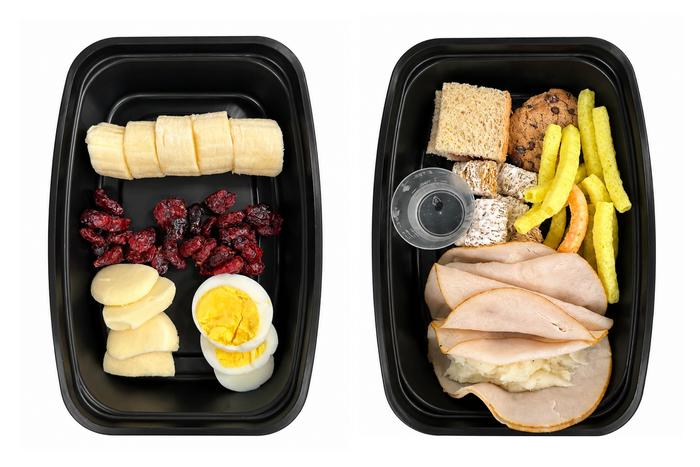
The ultra-processed meal was a peanut butter and jelly sandwich, deli turkey, veggie chips, a cookie, cereal and instant mashed potatoes, News-Medical reported. The minimally processed meal was sliced banana, dried cranberries, cheese and egg.
Volunteers ate in a sealed metabolic chamber, and researchers drew blood before the meal, right after it and six more times over three hours. On separate days, participants had brain scans while looking at pictures of foods.
What they found
“We were shocked when every single metabolic metric differed,” DiFeliceantonio said in the release.
According to the release and News-Medical, after the ultra-processed meal:
- Insulin rose higher.
- Blood sugar stayed elevated longer.
- The body burned carbohydrates differently.
The brain scans showed differences in reward and motivation areas, including the nucleus accumbens. Those brain differences tracked with the metabolic differences. Interestingly, participants didn’t report liking one meal more than the other.
Dr. Dariush Mozaffarian of Tufts University, who commented on the research, told Newsweek, “Processing matters, with effects on insulin, metabolism, and the brain beyond macronutrients alone.”
Keep it in perspective
This was a careful study, but a small one. The researchers noted that it tested only one pair of meals, in young and healthy people. The protein sources were different between the meals, and the team didn’t separately measure the effects of additives or food structure. Newsweek reported that the researchers aren’t yet sure whether these short-term changes add up to long-term health effects.
So this isn’t a reason to panic over a sandwich. It’s one more piece of evidence that how food is made matters, not just what the nutrition label says.
Easy ways to eat less processed food
You don’t need a special diet or expensive products. Using the study’s own meals as a guide:
- Swap the snack bag for whole fruit. A banana or apple instead of chips or a cookie.
- Keep hard-boiled eggs on hand. They’re cheap, filling and ready to grab.
- Choose real cheese over processed snacks. A few slices of cheese and some dried fruit make an easy lunch.
- Cook potatoes instead of using instant flakes. It takes longer, but it’s simple and cheap.
- Read ingredient lists. If you can’t picture where an ingredient came from, the food is probably heavily processed.
For self-reliant households, this is good news. The minimally processed foods in this study are the kind you can raise, grow, buy in bulk or keep in the pantry.
The bottom line
Counting calories tells only part of the story. In this study, two meals that matched almost perfectly on paper still led to different insulin, blood sugar and brain responses. More research is needed, but the takeaway is practical: eat more food that looks like it came from a farm, and less that looks like it came from a factory.